
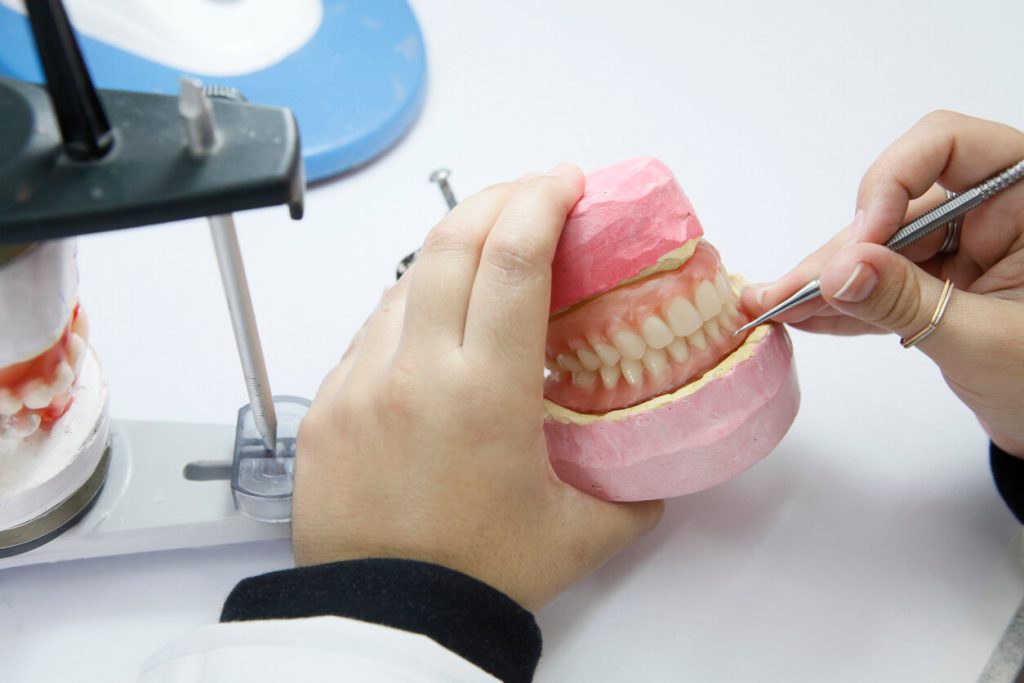
If you have broken dentures, it can feel urgent. Eating becomes harder, words may sound different, and you may not want to show your smile. It’s natural to ask whether you can fix broken dentures without seeing a dentist.
You may be able to manage a safe, temporary denture fix at home, but real repairs usually require the assistance of a dentist or a lab. Because dentures are tailored to your gums and the way your teeth come together, getting an accurate fit is crucial. Even small shape changes can cause sore spots or bite issues that worsen damage over time.
This article is for general informational purposes only and is not a replacement for professional dental advice. If you are in pain or unsure, it’s safest to call a dental office.
A Quick Decision Guide: Can You Try Something at Home or Not?
Call a dentist as soon as possible if you notice any of these:
- Pain, bleeding, swelling, or gum inflammation
- Sharp edges that can cut your mouth
- The denture is broken in half, or the base has cracks through the pink acrylic
- A tooth is missing or loose, and chewing feels “off.”
- The denture rocks, slips, or no longer fits your gums
- A partial denture clasp is bent or broken and poking tissue
- You feel this is a dental emergency (you can’t eat, you’re in significant discomfort, or symptoms are worsening)
A short-term, at-home approach may be reasonable only if:
- There are minor cracks, a tiny chip, or a small rough spot
- The denture still fits the same, and there’s no pain when you bite
Even then, consider it a temporary fix, not a permanent solution.
What You Can Safely Do at Home Right Away
Before attempting to repair broken dentures, prioritize safety and prevent further damage. If you’re asking, can you repair dentures at home? The next section will clarify what’s safe to handle on your own versus what should be left to a dental professional.
Step 1: Stop Wearing Broken Dentures if They Irritate Your Mouth
Wearing broken dentures can cause sores and create new pressure points on your gums. If anything feels sharp, pinches, or changes your bite, stop wearing them until a professional can evaluate them.
Step 2: Rinse Gently
Rinse the dentures and your mouth with cool or lukewarm water. Avoid hot water. Heat can cause the denture material to warp and alter the fit.
Step 3: Handle Carefully to Avoid Drops
Dentures can crack when they come into contact with a hard surface. To reduce breakage risk:
- Hold them over a folded towel, or
- Place a small amount of water in the sink before handling them.
Step 4: Save All Broken Pieces
If there are broken pieces, collect everything, including any chipped or broken teeth that have come loose. Place them together in a clean container. This can help a professional repair dentures more accurately.
Step 5: Ease Discomfort While You Wait
Safe short-term comfort steps include:
- Eat soft foods and chew slowly.
- Avoid tough, crunchy, or sticky foods that may add unnecessary pressure.
- Use a warm saltwater rinse if your gums feel sore.
- If the denture is intact but slightly loose, a small amount of denture adhesive may help it stay in place for a short-term period.
Important: Adhesive can help with holding, but it does not repair broken dentures or seal cracks.
Step 6: Store Dentures Properly
When you’re not wearing them, keep dentures moist:
- Store in plain water or denture soaking solutions labeled for dentures
- Avoid bleach unless a product specifically says it’s safe
- Do not boil or heat dentures
These steps won’t restore broken dentures, but they can help protect your mouth and prevent the denture from worsening before treatment is received.
DIY Denture Repair: What Can You Use to Repair Dentures
The safest at-home options are limited and should be treated as a temporary measure.
What a Denture Repair Kit Can and Cannot Do
An over-the-counter denture repair kit (or repair kit) is usually designed for small, clean breaks in acrylic. In the best case, it may provide a short-term solution, allowing you to manage until your next appointment.
A denture repair kit may help when:
- It’s a clean break, and the parts fit back together exactly
- There is no bite change
- There is no pain or rocking
A kit is much less likely to help when:
- The denture is broken in half at a stress point
- The crack runs through the base that rests on your gums
- The denture no longer fits, slips, or rocks
- Teeth on the denture are chipped, broken, or missing
- You have a partial denture with metal parts (clasps can be tricky and easy to damage)
Even if the kit seems to “work,” it’s often only a temporary fix. A professional may still need to restore the fit, correct the bite alignment, and reinforce the repair.
Avoid Super Glue and Other Household Glues
Do not use super glue, craft glue, epoxy, or hardware-store adhesives. These products are not made for oral use. They may irritate tissues, create a rough or uneven surface, and complicate future professional denture repair. They also tend to break again under chewing pressure.
If you’re asking, “Can you repair broken dentures without a dentist?” This is one of the clearest lines: avoid household glue.
Common DIY Repair Mistakes (And Why They’re Risky)
- Filing or Sanding Too Much: Altering the denture’s fit on your gums can cause pressure points and sores.
- Forcing Pieces Together Slightly Misaligned: That small shift can change your bite and lead to jaw discomfort.
- Using Heat to Reshape a Denture: Heat can cause acrylic to warp, potentially turning a repair into a replacement situation.
- Bending Partial Denture Clasps: This can weaken the metal, alter their grip on teeth, and increase the risk of further damage.
If you attempt any DIY repair, be cautious, follow the kit instructions exactly, and stop immediately if you experience any pain.
When You Need a Dentist for Denture Repair, and What to Expect
Some damaged dentures truly need professional help. If the fit, bite, or comfort has changed, it’s usually time to visit the office.
Signs It’s Time to Get It Checked
Seek treatment if:
- You have pain, sores, swelling, or gum inflammation
- The denture base has cracks or a full break
- The denture slips, rocks, or feels loose in a new way
- Teeth on the denture are chipped, broken, or missing
- Chewing feels uneven or creates stress in your jaw
- A partial denture clasp is broken or digging into your gums
These problems can affect oral health, especially if you have missing teeth under a partial denture and the remaining teeth are taking extra force.
Types of Professional Solutions You May Hear About
A dental office may recommend one or more of the following:
- Denture Repair: Reconnecting broken areas, replacing broken teeth, or rebuilding damaged acrylic
- Adjustment: Smoothing or reshaping small areas to reduce rubbing and discomfort
- Reline: Refitting the inside surface to match your gums more closely. Why this matters: gums and bone can change over time. When a denture gets loose, it can rock during chewing. That rocking increases stress and can lead to cracks or repeated breakage.
- Replacement: If the denture is too damaged to repair safely, or the fit can’t be restored
- Other Options: For some patients, implants may be discussed to improve stability and reduce slipping
Get Your Smile Back With Fast, Safe Denture Help at Grand Oaks Dental Care
You can sometimes do a temporary home fix for very minor denture damage without a dentist. Most broken dentures still need professional repair to restore proper fit, comfort, and safe chewing. Avoid quick fixes like super glue, which can cause harm and often lead to further damage.
Have broken dentures, missing teeth, or painful sore spots? Grand Oaks Dental Care can provide a fast and gentle evaluation. If your denture slips or no longer fits, you may need a repair, reline, or replacement. Call Grand Oaks Dental Care today to schedule your appointment and get a confident, comfortable smile again.


